Financial & Operations Sync for a Medical Clinic
A high-volume hair transplant clinic approached Exploge with a critical problem. Their clinical system and accounting software were not communicating properly, payroll was handled manually, and payment enforcement before surgery was unreliable. The business was growing, but its backend operations were fragile. Without structural automation, scaling would only multiply errors.
The Core Problem: Disconnected Systems
The clinic relied on Pabau for patient management and QuickBooks Online for accounting. Because these systems were not synchronized, staff were manually recreating invoices, copying line items, and reapplying tax structures. This duplication wasted hours every week and increased the risk of financial inconsistencies. Payment statuses, refunds, and credit notes were also not aligned between platforms. This created accounting discrepancies and made financial reporting unreliable. Revenue leakage was not theoretical, it was happening through process gaps.
Payroll Bottlenecks and Human Dependency
Salary increments based on performance and tenure were calculated manually in spreadsheets. This created delays, inconsistencies, and unnecessary back-and-forth communication. Every quarterly update required manual intervention, which meant payroll accuracy depended entirely on human discipline. That is not scalable.
Revenue at Risk
Hair transplant procedures involve high-ticket payments. However, there was no automated mechanism ensuring funds were cleared before surgery dates. Staff had to manually track due dates and follow up with patients. If someone missed a confirmation, the clinic risked last-minute cancellations and revenue disruption. This was a structural weakness, not a minor inconvenience.
The Strategic Automation Framework
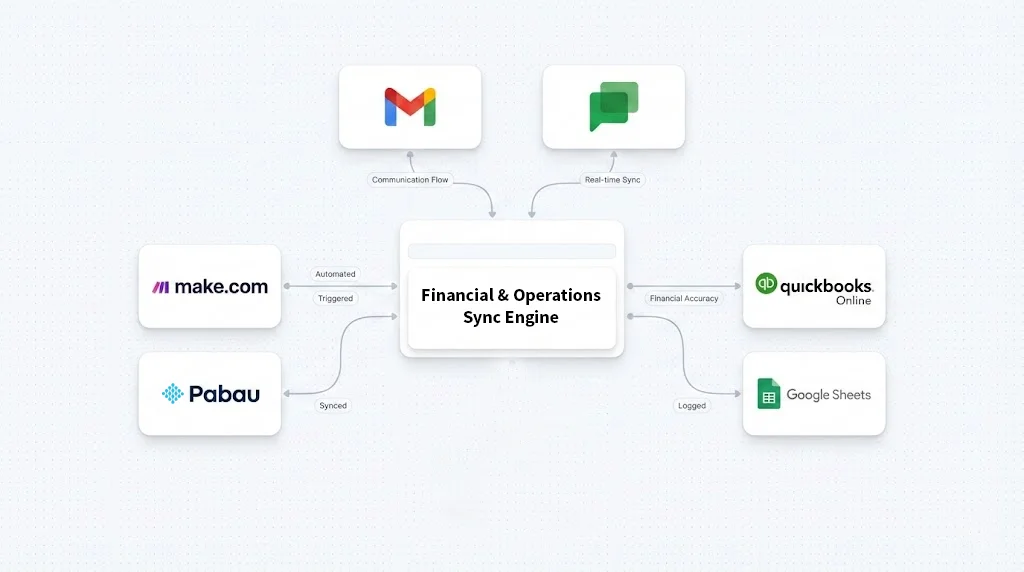
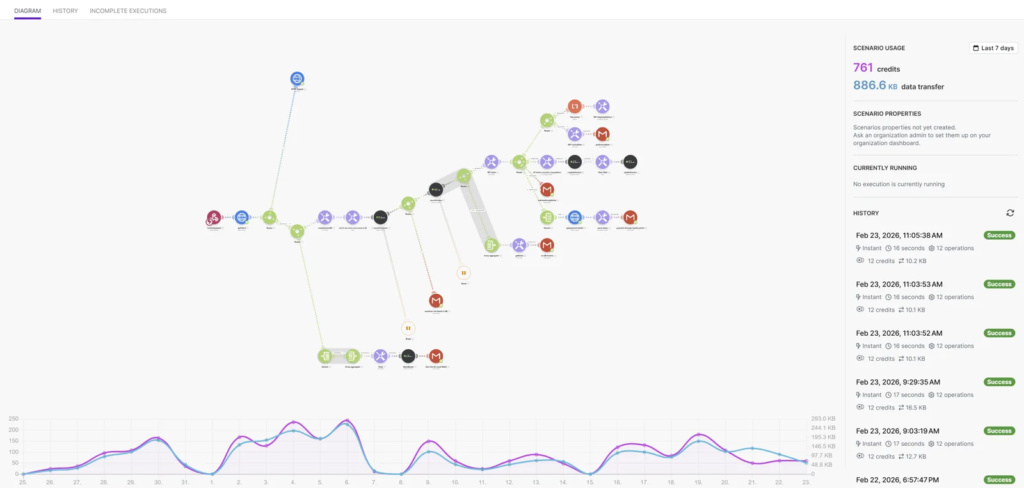
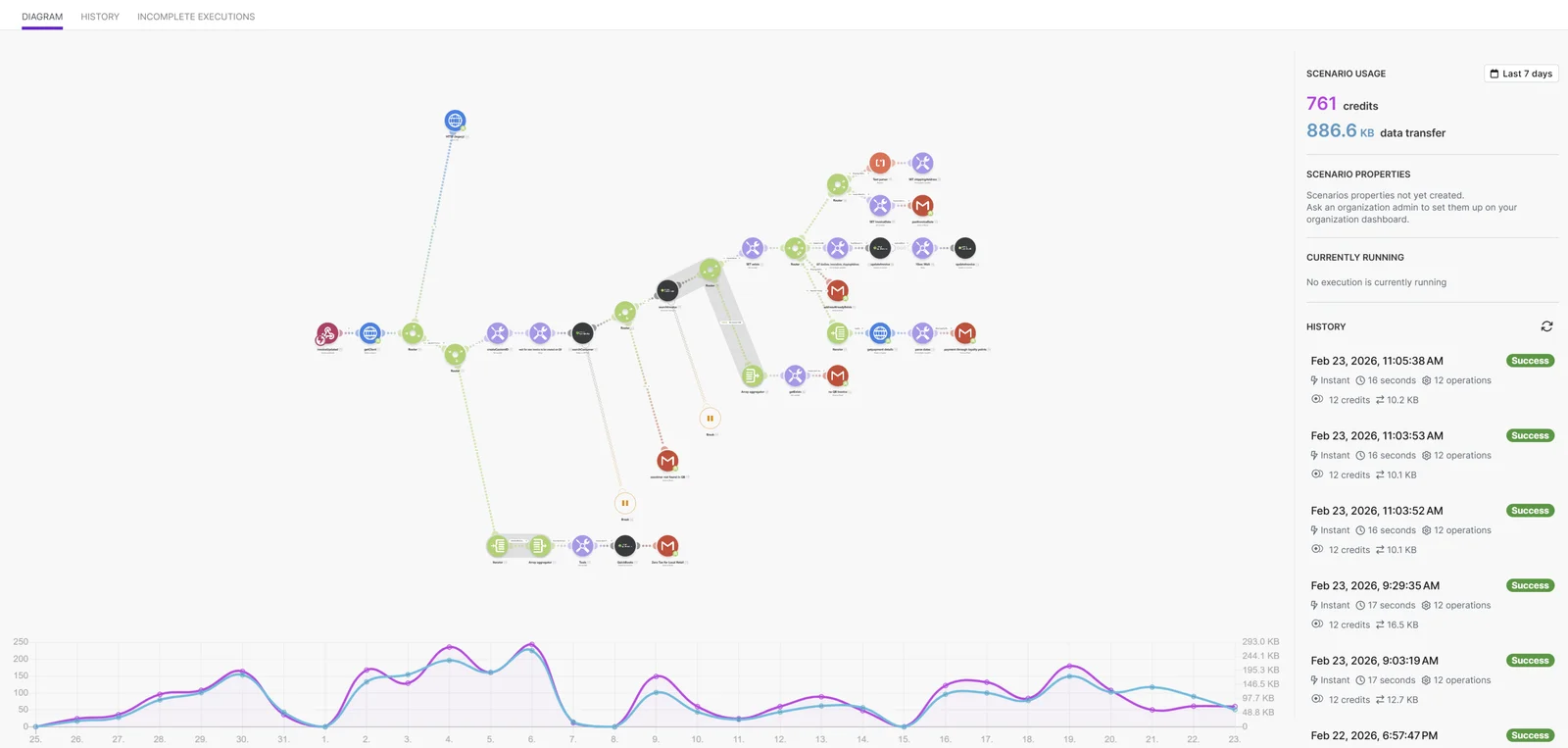
Exploge engineered a centralized automation hub using Make.com as the orchestration layer. The objective was simple—create a single source of financial and operational truth across systems. A bi-directional sync was implemented between Pabau and QuickBooks Online. When an invoice is created inside the clinic’s EMR, a mirrored invoice with identical itemization and tax logic is automatically generated inside the accounting suite. Payment confirmations, refunds, and credit notes update in both systems instantly, closing the reconciliation gap entirely. For payroll, we built a logic-driven engine that automatically calculates quarterly salary increments based on predefined rank percentages, then pushes management notifications through Google Chat and sends formal salary confirmations via Gmail. To address payment risk, we implemented dynamic due date logic. The system automatically calculates a payment deadline exactly 14 days before each scheduled procedure. If an appointment is booked within that 14-day window, an urgent verification workflow is triggered to ensure funds are cleared before surgery begins.
Measurable Business Impact
The clinic achieved complete financial alignment between clinical and accounting systems, eliminating human reconciliation errors. Administrative workload dropped significantly, saving over 15 hours per week that were previously lost to repetitive data entry and payroll calculations. Cash flow stability improved immediately. By enforcing structured pre-surgery payment deadlines, the clinic reduced last-minute cancellations and secured revenue before allocating surgical slots. Most importantly, operations became scalable—capacity increased up to three times without increasing administrative headcount.
Technical Execution
The integration was built as a deep API architecture using Make.com with advanced webhook orchestration and structured HTTP request handling. Custom in-flight validation mechanisms and retry logic were deployed to prevent data mismatches during API timeouts. The system was engineered for reliability under load—not just basic connectivity.